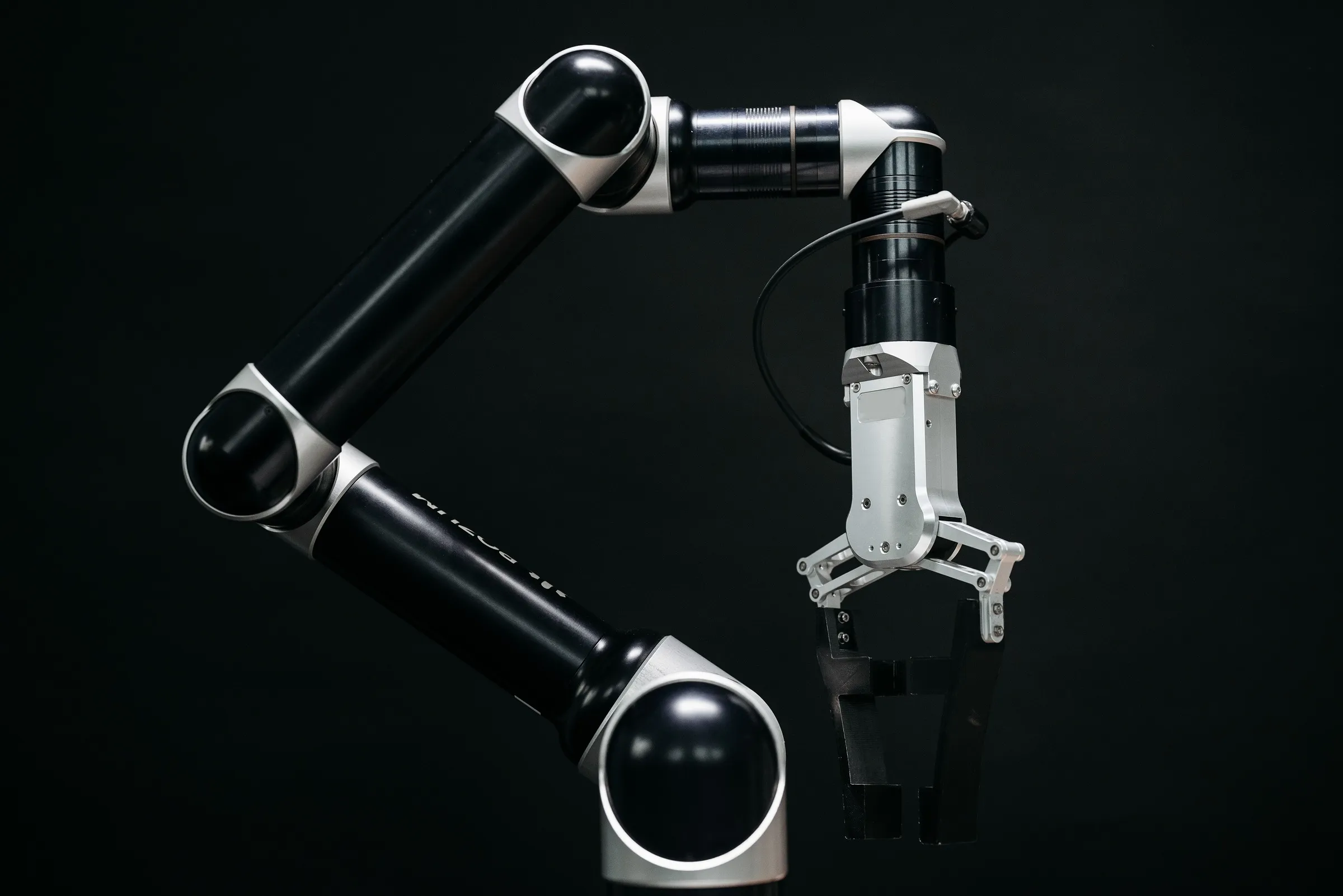


A dependable place to run it
Separate testing and live environments, platform maintenance and monitoring. The application stops being someone’s side project and becomes a service with an operator.
Claude App to Production · London-based Anthropic Partner
First pilot typically live in about three weeks
Managed EU platform or documented handover
S.01 · What is the Service
Someone in your business built a useful application with Claude, on a personal account, an artifact, a project. It works, people want it, and IT needs to approve it. Nugawi preserves what was built and the keep-building-with-Claude loop, and puts a controlled, monitored platform underneath it that your IT team can review.
A managed application service for tools built with Claude. We review the application, adapt what needs adapting, and either host and operate it for you on our EU-based platform, or prepare and document it so your own IT team can run it. Either way: controlled access, protected data, tested releases, real backups, and the person who built it carries on building with Claude. A first pilot is typically live in about three weeks.
S.02 · The Platform
Six business requirements every app outgrows its author's laptop on, each covered by the core service.
Separate testing and live environments, platform maintenance and monitoring. The application stops being someone’s side project and becomes a service with an operator.
Authenticated access, separate permission levels, and a record of who requested each action, so the right teams see the right things.
Encrypted connections and storage, separate credentials for testing and live, secrets kept out of delivery packages, all hosted in the EU.
A change summary before delivery, automatic deployment checks, and the same tested package promoted to live, never a rebuild.
Continuous database backup with a 30-day recovery window, daily full backups of data and attachments, and weekly restore rehearsals that prove it works.
Platform security updates, backup oversight, monitoring and incident support within an agreed scope. A named operator, not best-efforts goodwill.
S.03 · The Two Routes
Both routes start with a short fixed-fee readiness review of one application that produces a firm price and a plan your IT can assess. Start with one app; reuse the pattern for the rest.
We run the application on our EU-based managed platform: review, preparation and deployment, then hosting, monitoring, backups, maintenance and agreed support. A first pilot in about three weeks. Your IT team approves the hosting and controls: the evidence they need is part of the service. A firm price for your application comes out of the readiness review.
We adapt the application and deploy it into an agreed corporate environment of your choosing, with full documentation and a rehearsed handover, then your people operate it. Pilot and handover in three to six weeks. You carry the hosting costs; ongoing support from us is optional. A firm price comes out of the readiness review.
S.04 · The Release Loop
The owner keeps building with Claude. Every change passes the same checks before colleagues see it.
The application owner keeps working in your company-managed Claude workspace, exactly the way it was built.
The delivery tooling packages the code and uploads it, with data, attachments and secrets excluded, and the owner reviewing every change first.
The new version lands in the separate testing environment, where automated deployment checks run before your people start checking.
An authorised person promotes the same tested package to live, with a full release history and optional second-person approval.
Authorised people see status, versions and backup health through the connector. Rollback is a defined operation, rehearsed like everything else.
S.05 · Why It Needs a Specialist
This service completes the journey our Agent SDK and MCP practice starts: the same production discipline (evals, governance, IP ownership) applied to the apps your own people build. Pair it with a Claude adoption programme to keep the builders building safely. Production agents, 90-day builds and Discovery Sprints are all available under the same engagement structure if you want more than one application.
A Claude-built app that gets rebuilt as a conventional web project loses the thing that made it valuable: the owner’s ability to keep improving it with Claude. We preserve the application and the loop it was born in.
Work built on a personal Claude account needs to move to a company-managed workspace before it holds business data. We handle the migration and the workspace setup with your IT team, it is standard practice when a person’s project becomes a business tool.
We have already taken a client’s Claude-built application from a blank page to production in three weeks. The pattern (readiness review, controlled launch, managed operation) is repeatable for yours.
S.06 · FAQ
Common questions about taking a Claude-built application into business use.
Business applications built with Claude: tools a colleague created on a personal Claude account, Claude artifacts, Claude projects, or small agent workflows that outgrew their author. We start with a short readiness review that establishes exactly what to export, adapt or rebuild, and the route that fits your organisation.
Yes, that is the point. The owner keeps building and improving the application in a company-managed Claude workspace, and every change flows through the same tested delivery path before colleagues see it. Nothing about moving into production means stopping the way it was built.
The service is built for it. Onboarding agrees the evidence your IT team needs: an access matrix, release history with approvals, automated deployment checks, backup and restore-rehearsal results, and a clear controller/processor agreement. Personal-account work is moved to a company-managed Claude workspace under business data terms.
The managed platform runs in the EU, with encrypted connections and storage, separate credentials for testing and live, and secrets kept out of delivery packages, a fit for organisations working under UK GDPR and EU GDPR. Backup and keys stay in the EU.
Pricing is not published for this service. Both routes start with a short fixed-fee readiness review of one application, and the review produces a firm, written price for your specific application: what is included, and what passes through at cost, before you commit to anything. What costs what is never a surprise.
You do: code, data and business requirements, always. Exit is designed in: if you leave, your code, database and attachments return in usable formats with handover help. We win on the quality of the service, never on switching costs.
S.07 · Start
Production.
Tell us what was built and where it runs today. A short readiness review gives you a firm price and a plan your IT team can sign off.